
Choosing new windows involves more than selecting a frame color or style. Windows influence indoor comfort, ventilation, maintenance requirements and the overall appearance of a property. For Perth homeowners, the choice becomes particularly important because window materials must perform through hot summers, winter rainfall and, in some locations, exposure to coastal conditions.
When comparing aluminium vs uPVC windows, it helps to understand how each material performs rather than assuming one is always better. Both have practical advantages, but their suitability depends on the home’s design, location, energy-efficiency requirements and budget.
This guide examines the key differences to help homeowners make an informed window selection.
What Is the Difference Between Aluminium and uPVC Windows?
Aluminium and uPVC are two common materials used to manufacture residential window frames.
Aluminium is a lightweight metal valued for its strength, design flexibility and ability to support relatively slim window profiles. It is frequently used in contemporary homes, particularly where larger glass areas and clean architectural lines are preferred.
uPVC stands for unplasticised polyvinyl chloride. It is a rigid plastic material manufactured into window profiles, often with internal reinforcement where required. uPVC frames are known for their thermal insulation properties and relatively low maintenance requirements.
The main difference lies in how the materials respond to heat, structural demands and environmental exposure.
Aluminium vs uPVC Windows: Quick Comparison
| Feature | Aluminium Windows | uPVC Windows |
| Material | Lightweight metal | Rigid plastic |
| Frame appearance | Typically slim and modern | Often wider profiles |
| Strength | High structural strength | Depends on profile and reinforcement |
| Thermal performance | Improved with thermal breaks | Naturally insulating |
| Maintenance | Low, with routine care | Low, with routine care |
| Coastal suitability | Requires suitable finishes and hardware | Frame does not rust; hardware needs protection |
| Color options | Wide range of powder-coated finishes | Colors and finishes vary by manufacturer |
| Cost | Depends on system and glazing | Depends on system and glazing |
Neither material is automatically the best choice for every home. The complete window system, including glazing, seals, hardware and installation quality, plays an important role in performance.
Which Window Material Is Better for Perth’s Climate?
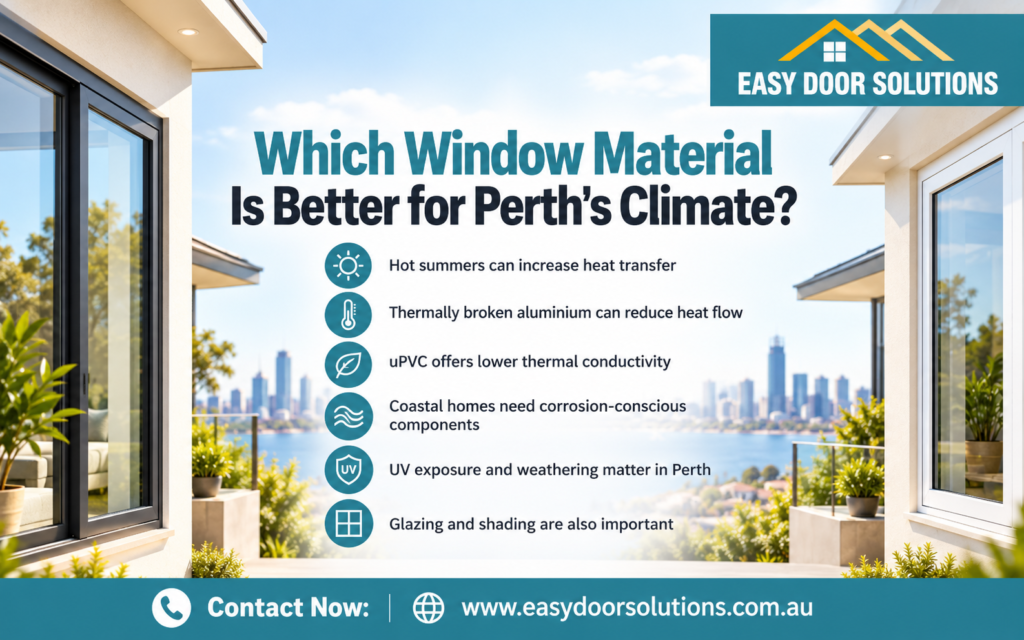
Perth experiences warm to hot summers, cooler winters and significant sunshine throughout the year. Homes near the coast may also experience salt-laden air, which can affect exposed building materials and fittings.
Performance During Hot Summers
Standard aluminium frames conduct heat readily. This means heat can transfer through the frame when there is a temperature difference between indoors and outdoors.
Thermally broken aluminium systems address this issue by incorporating an insulating barrier between the inner and outer sections of the frame.
uPVC has lower thermal conductivity, helping reduce heat transfer through the frame itself.
However, frame material is only one consideration. Window orientation, glass selection, external shading and air leakage can significantly affect indoor temperatures.
For a west-facing living room exposed to strong afternoon sunshine, suitable glazing and shading may be just as important as choosing between aluminium and uPVC.
Suitability for Coastal Properties
Perth suburbs closer to the ocean can expose windows to salt, moisture and wind-driven contaminants.
Aluminium windows can perform well in these environments when manufactured with appropriate protective finishes and corrosion-resistant components.
uPVC frames do not develop metal corrosion, although hinges, locks, screws and reinforcement components still require suitable protection.
In either case, homeowners should check the manufacturer’s recommendations for coastal installations.
UV Exposure and Weathering
Long-term sunlight exposure is another consideration.
Quality architectural aluminium finishes are designed to withstand outdoor conditions, although their performance depends on the coating specification and maintenance.
Modern uPVC profiles are manufactured with stabilisers intended to improve resistance to sunlight and weathering. Product quality matters, particularly in climates with high UV exposure.
Choosing products supported by appropriate warranties and Australian performance testing is more useful than judging durability by material alone.
Aluminium vs uPVC Windows: Which Is More Energy-Efficient?
Energy efficiency is an important consideration when selecting windows for a Perth home.
uPVC generally provides better frame insulation than standard non-thermally broken aluminium because the material transfers less heat.
However, thermally broken aluminium windows can offer substantially improved thermal performance compared with conventional aluminium systems.
Homeowners should compare complete window ratings rather than relying only on the frame material.
Two useful measurements are:
- U-value: Measures how readily heat passes through a window. A lower value indicates better insulation.
- Solar Heat Gain Coefficient (SHGC): Indicates how much solar heat enters through the window. The appropriate value depends on climate, orientation and shading.
Glass type, double glazing, frame construction and installation quality all influence these results.
For example, a thermally broken aluminium window with suitable double glazing may outperform a poorly specified uPVC window. Similarly, a well-designed uPVC system may offer better insulation than a basic aluminium window.
The most suitable option should be assessed using the complete product specifications and the home’s particular requirements.
What Are the Advantages of Aluminium Windows?
Aluminium remains a popular window material in Australian residential construction because it combines strength with considerable design flexibility.
For homeowners exploring aluminium windows Perth, understanding the practical advantages can help narrow down suitable frame designs.
1. Strong Frames With Slim Profiles
Aluminium offers excellent strength relative to its weight.
This allows manufacturers to design relatively narrow frames while maintaining structural performance, making it suitable for homes where larger glass areas and uninterrupted views are desirable.
2. Flexible Window Styles
Aluminium systems are available in different configurations, including sliding, awning and double-hung windows.
This flexibility helps homeowners select windows that suit room dimensions, ventilation needs and architectural preferences.
3. Low Routine Maintenance
Aluminium frames generally require less finishing maintenance than traditional painted timber frames.
Regular cleaning, checking drainage openings and maintaining moving components can help preserve their condition.
However, low maintenance does not mean maintenance-free, particularly in exposed coastal environments.
4. Contemporary Appearance
Slim frames and a variety of finish options allow aluminium windows to complement modern renovations and new homes.
A consistent frame colour can also create a coordinated appearance across multiple rooms.
5. Suitability for Different Opening Sizes
Aluminium’s structural properties make it useful for a wide range of window dimensions.
The final frame specification must still suit the glass weight, opening size, wind loads and relevant Australian Standards.
What Are the Advantages and Limitations of uPVC Windows?
uPVC provides an alternative for homeowners who place considerable importance on thermal insulation and low-maintenance frames.
Key Advantages
Natural insulation: uPVC does not conduct heat as readily as aluminium, helping reduce thermal transfer through the frame.
Low maintenance: Frames generally do not require routine repainting and can be cleaned using suitable products.
Corrosion resistance: The plastic frame itself does not rust, although associated metal components still need protection.
Acoustic performance: Well-designed uPVC windows with appropriate glazing and airtight seals can support noise reduction.
Potential Limitations
uPVC is not necessarily suitable for every window design or opening size.
Depending on the system, reinforcement may be required to meet structural requirements. Some profiles may also be wider than comparable aluminium designs.
Colour selection, thermal expansion, long-term finish performance and the availability of replacement components vary between manufacturers.
Homeowners should assess the specific system rather than assuming all uPVC windows provide identical results.
How Do Aluminium and uPVC Window Costs Compare in Perth?
Window prices can vary considerably, making it difficult to identify one material as consistently cheaper.
Standard aluminium frames may be competitively priced, while higher-performance thermally broken systems generally involve additional manufacturing complexity.
uPVC pricing depends on profile quality, reinforcement, glazing specifications and available configurations.
Other factors affecting installation costs include:
- Overall window dimensions and the number of windows required
- Single, double or specialised glazing
- Sliding, awning or double-hung configurations
- Hardware and locking mechanisms
- Frame colour and finish specifications
- Removal and disposal of existing windows
- Access restrictions and installation complexity
- Any necessary changes to surrounding openings
For an accurate comparison, homeowners should request quotes based on similar window dimensions, glazing performance and installation requirements.
Comparing only the initial purchase price can overlook differences in maintenance, durability and long-term thermal performance.
When Should You Consider Aluminium Window Replacement?
Replacing existing windows may become necessary when deterioration begins affecting safety, operation or comfort.
Some problems can be resolved through adjustments or hardware repairs, while others may justify replacing the window system.
Signs Worth Investigating
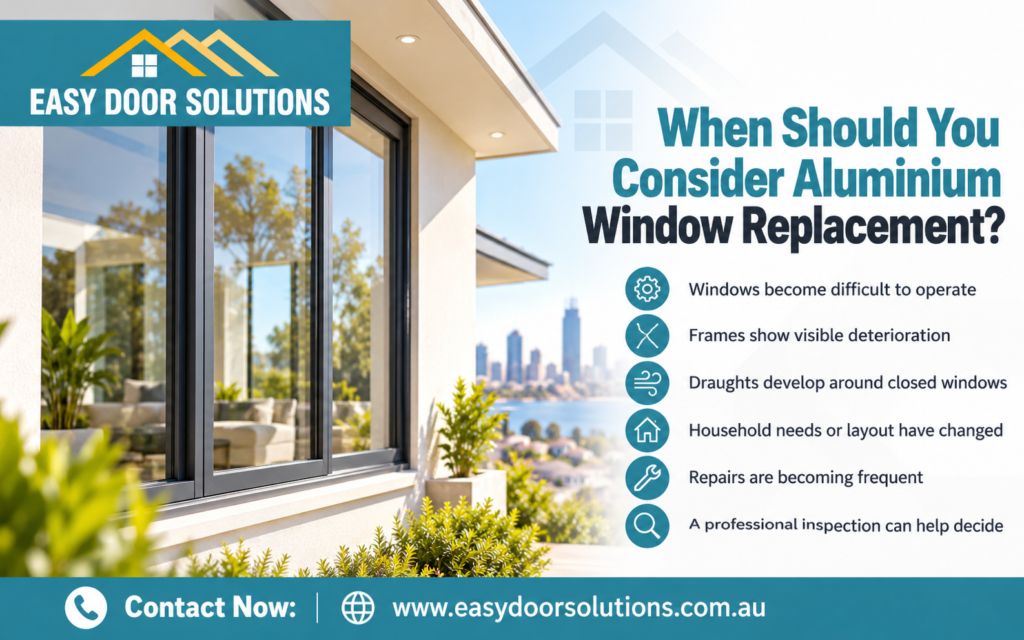
- Windows become difficult to operate
Sticking, uneven movement or repeated jamming may indicate worn hardware, damaged tracks or frame alignment issues.
- Frames show visible deterioration
Corrosion, distortion or damage around frame joints should be inspected to determine whether repair is practical.
- Draughts develop around closed windows
Air leakage may result from worn seals, damaged components or installation issues.
- Existing windows no longer meet household needs
A renovation may create opportunities for improved ventilation, different opening styles or upgraded glazing.
- Repairs are becoming frequent
Repeated faults across aging windows can make replacement worth considering, especially when parts are difficult to source.
Not every faulty window needs replacing. A professional inspection can help identify whether repairs, hardware upgrades or complete replacement would be appropriate.
Which Window Material Should You Choose for Your Perth Home?
The best decision depends on what matters most for your particular property.
Choose Aluminium Windows When:
- You prefer slim, contemporary frame designs.
- Larger glass areas are part of the architectural plan.
- You want access to a variety of opening configurations.
- You require a durable frame system suited to the installation.
- Suitable glazing and frame specifications meet your thermal requirements.
Consider uPVC Windows When:
- Frame insulation is a major selection priority.
- You prefer low-maintenance, non-metal frame construction.
- The available profiles suit your window dimensions.
- You have checked the manufacturer’s UV and weathering specifications.
- The complete system provides the thermal and structural performance required.
For homeowners prioritising both slim profiles and thermal performance, thermally broken aluminium may also be worth investigating.
Ultimately, material choice should be considered alongside window orientation, glass selection, building design and the performance ratings of the actual products being quoted.
Frequently Asked Questions
Are aluminium windows better than uPVC windows in Perth?
Neither option is universally better. Aluminium can suit homes requiring slim frames, structural strength and flexible designs, while uPVC offers naturally insulating frame construction. Perth homeowners should compare complete window performance, finishes, glazing and installation requirements before deciding.
Are aluminium windows suitable for coastal homes?
Yes, aluminium windows can be suitable for coastal properties when the frame finishes, fasteners and hardware are specified for the exposure conditions. Regular cleaning and maintenance remain important, especially where salt deposits accumulate.
Which windows are better for reducing heat?
uPVC frames typically insulate better than standard aluminium frames. Thermally broken aluminium can also provide improved insulation. Overall heat control depends on glazing, solar heat gain, shading, seals and the building’s design.
Are uPVC windows always more expensive than aluminium?
No. Pricing varies according to product quality, glazing, frame design, installation requirements and manufacturer. Comparing equivalent window specifications provides a more meaningful cost assessment than comparing materials alone.
How long do aluminium windows last?
Their service life depends on product quality, environmental exposure, installation and maintenance. Properly specified and maintained aluminium windows can provide many years of service, but there is no single lifespan applicable to every installation.
Is replacing aluminium windows better than repairing them?
Minor issues involving rollers, seals or hardware may be repairable. Replacement becomes more relevant when frames are extensively damaged, components repeatedly fail or the existing windows no longer meet the property’s requirements.
Explore Aluminium Window Solutions With Easy Door Solutions
Selecting new windows is easier when homeowners understand the available frame styles, glazing considerations and installation requirements.
Easy Door Solutions provides aluminium glass window options for Perth properties, including sliding, awning, double-hung and high-performance sliding window configurations.
Whether you are renovating an older home or planning aluminium window replacement, it is important to choose a window system that suits the opening, local conditions and household priorities.
Contact Easy Door Solutions on 0430 646 700 to discuss the available aluminium window options and arrange a home consultation.
Final Thoughts
The decision between aluminium and uPVC windows should be based on practical performance rather than appearance or price alone.
Aluminium offers strength, flexible designs and slim profiles, while uPVC provides naturally insulating frame construction. Glazing, weather resistance, installation quality and product specifications can influence the overall result as much as the material itself.
For Perth homeowners, comparing these factors carefully can help achieve windows that complement the property and remain practical for everyday use over the years ahead.