
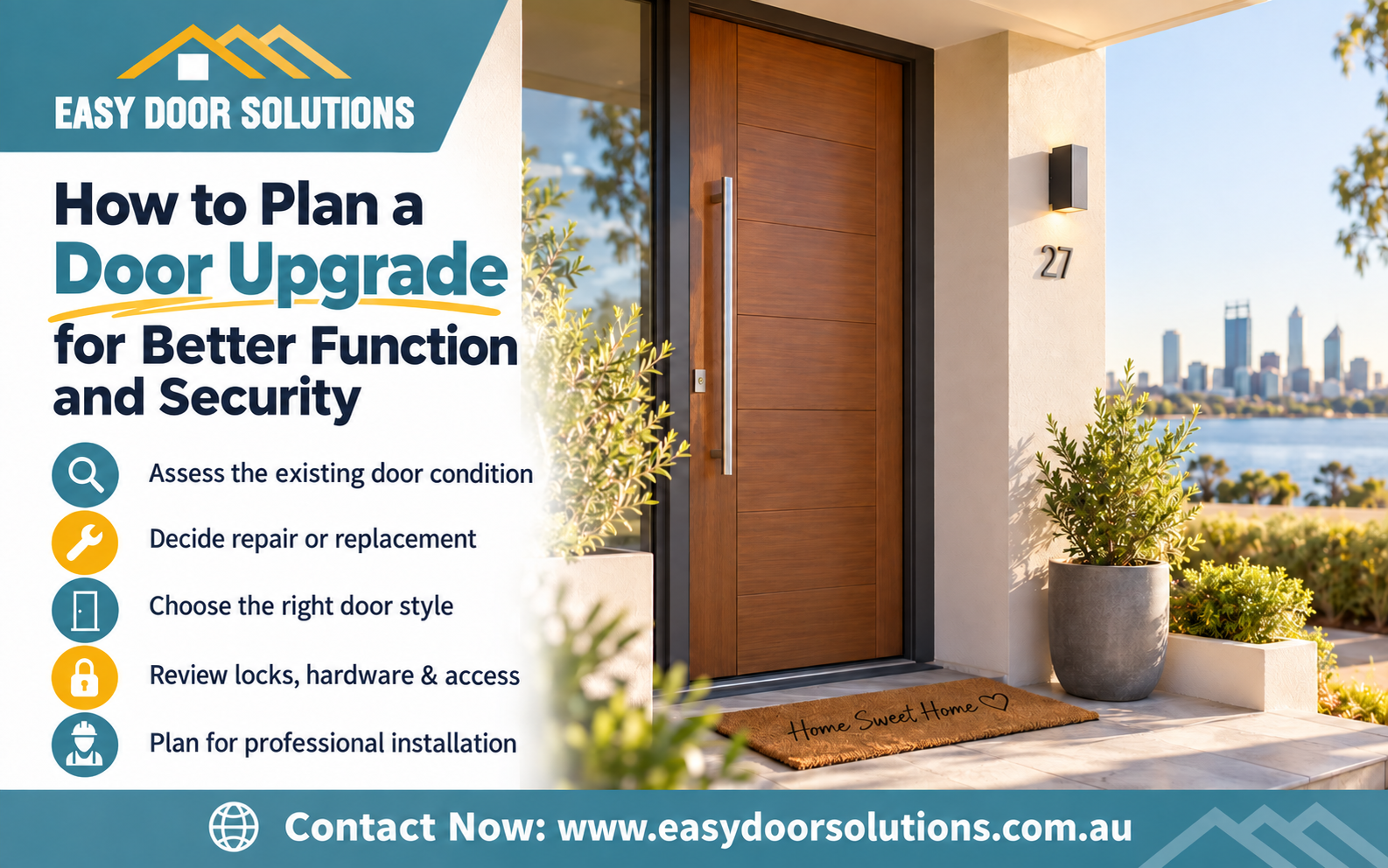
A door is used every day, yet it is easy to overlook how much it contributes to a home’s security, accessibility, appearance and comfort. A door that drags along the floor, struggles to lock, rattles in its frame or no longer suits the property can quickly become more than a minor inconvenience. Planning an upgrade carefully allows homeowners to address these problems while choosing a solution suited to the way the home is actually used.
For Perth homeowners considering door installation perth, the planning stage is just as important as selecting the finished door. Measurements, frame condition, hardware, security requirements and everyday access should all be considered before installation begins. Looking at these factors early can help avoid unnecessary changes later and lead to a door that operates smoothly and suits the property for years to come.
Start by Understanding Why the Door Needs an Upgrade
Before choosing a new door, identify what is wrong with the existing one.
Not every sticking or noisy door requires complete replacement. In some cases, worn rollers, damaged tracks, loose hardware or alignment problems can be repaired. In other situations, the door itself, surrounding frame or overall configuration may no longer be practical.
Common reasons homeowners consider an upgrade include:
- Difficulty opening or closing the door
- Damaged or deteriorating frames
- Unreliable locks or handles
- Worn rollers and tracks
- Poor security
- Visible gaps around the door
- Outdated appearance
- Changes to how a room or entrance is used
- Repeated repairs to an ageing door
- Renovations involving adjoining windows or openings
Understanding the underlying problem makes it easier to decide whether adjustment, repair or replacement is the appropriate next step.
Repair or Replace: Which Option Makes More Sense?
A professional inspection can help separate a component problem from a problem affecting the entire door system.
Repair May Be Suitable When
Repair can often be considered when the main structure remains in serviceable condition and the fault is limited to replaceable components.
Examples include:
- Worn rollers
- Damaged tracks
- Faulty handles
- Lock problems
- Minor alignment issues
- Damaged flywire
- Doors that have become difficult to slide
Replacing an individual part can often restore normal operation without unnecessarily replacing the entire unit.
Replacement May Be More Practical When
Door replacement can become a better option when problems are extensive or when the homeowner wants to change the function, appearance or security of an entrance.
Replacement may be considered if:
- The frame has significant damage
- The door repeatedly comes out of alignment
- Important components are no longer suitable
- Security has become a concern
- The opening is being renovated
- The homeowner wants a different door configuration
- Repeated repairs are no longer practical
The best decision should be based on the condition of the complete system rather than age alone.
Think About How the Door Will Be Used
Door selection should start with function.
A front entrance has different requirements from a patio door, internal sliding door or security screen. Consider who uses the doorway, how frequently it is opened and what you want the upgrade to achieve.
Ask questions such as:
- Is this a high-traffic entrance?
- Does the door need to provide additional security?
- Is easy opening important for children or older family members?
- Does furniture regularly pass through the opening?
- Is ventilation important?
- Is floor space limited?
- Does the door open onto an outdoor entertaining area?
Answering these questions helps narrow down an appropriate door type before attention turns to colours and finishes.
Choose a Door Style That Suits the Space
The right door should complement both the opening and the way the surrounding area is used.
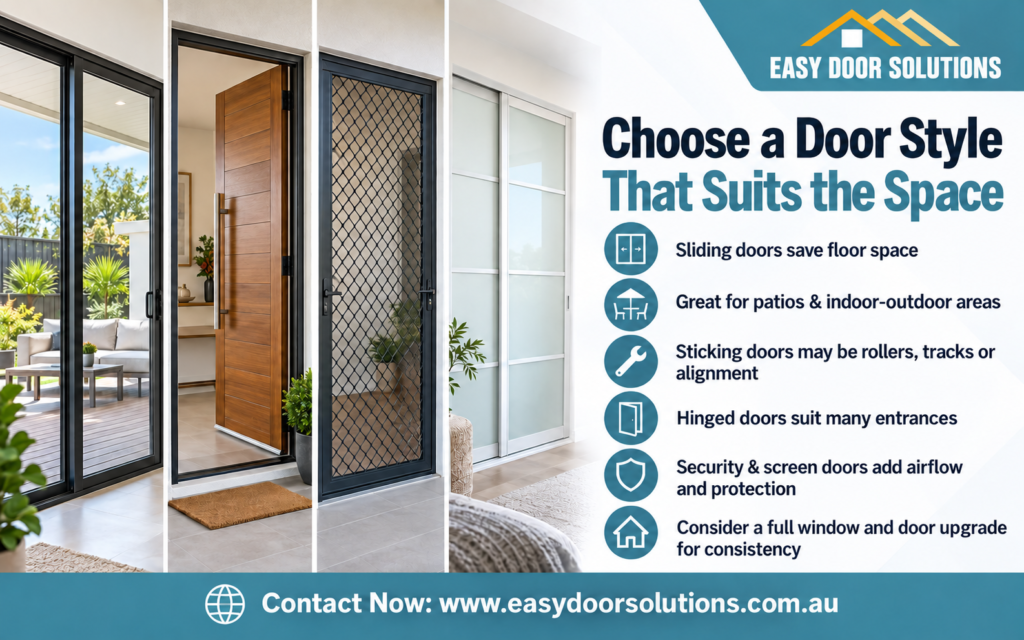
Sliding Doors
Sliding doors can work well where saving floor space is important. Because they move along a track rather than swinging into a room, they can also be practical for patios and areas where indoor and outdoor spaces connect.
If an existing sliding door is difficult to move, repeatedly jumps off its track or feels unusually heavy, the cause may be worn rollers, damaged tracks or alignment problems rather than the whole door.
Read more: Sliding Door Not Sliding? How to Fix Sticking & Off-Track Sliding Doors in Perth
This related guide explains common reasons sliding doors stick, become difficult to move or come off their tracks, and when professional repair may be worth considering.
Hinged Doors
Traditional hinged doors remain suitable for many entrances and internal areas. Correct alignment of the frame, hinges and locking hardware is important for reliable operation.
Security and Screen Doors
Security doors can add an additional layer at an entrance, while screen doors and flyscreens can support airflow while helping keep insects outside.
When several openings are aging at the same time, homeowners may also consider whether a broader perth window and door replacement project would provide a more consistent appearance and function throughout the property.
Check the Existing Frame Before Installation
A new door relies on the surrounding opening.
Installing a good-quality door into an unsuitable or damaged frame may lead to problems such as uneven gaps, difficult locking or poor movement.
Before installation, check for:
- Movement or distortion in the frame
- Visible damage
- Incorrect alignment
- Deterioration around fixing points
- Uneven surfaces
- Issues affecting the track or threshold
Measurements should also be accurate. Even relatively small discrepancies can affect how smoothly a door opens, closes and locks.
Do Not Treat Hardware as an Afterthought
Handles, rollers, locks, tracks, hinges and closers all affect everyday performance.
A door may look excellent but still become frustrating if the hardware does not suit its weight or intended use.
Locking
Choose locking hardware according to the location and purpose of the door. External entrances generally require more attention to security than internal doors.
Rollers and Tracks
For sliding systems, rollers and tracks should suit the door and allow consistent movement. Worn or unsuitable components can make even a well-fitted door difficult to operate.
Handles
Handles should be positioned conveniently and feel comfortable during regular use.
Closers and Other Hardware
Some doors may require self-closing mechanisms or other specialised components depending on their location and purpose.
Looking at all of these details as one system helps produce a better overall result.
Consider Security During the Planning Stage
Security should be built into the door upgrade rather than added as an afterthought.
Start by considering the door itself, then look at the frame, locking system, hardware and surrounding opening. A secure lock cannot compensate for a badly fitted door or a weak frame.
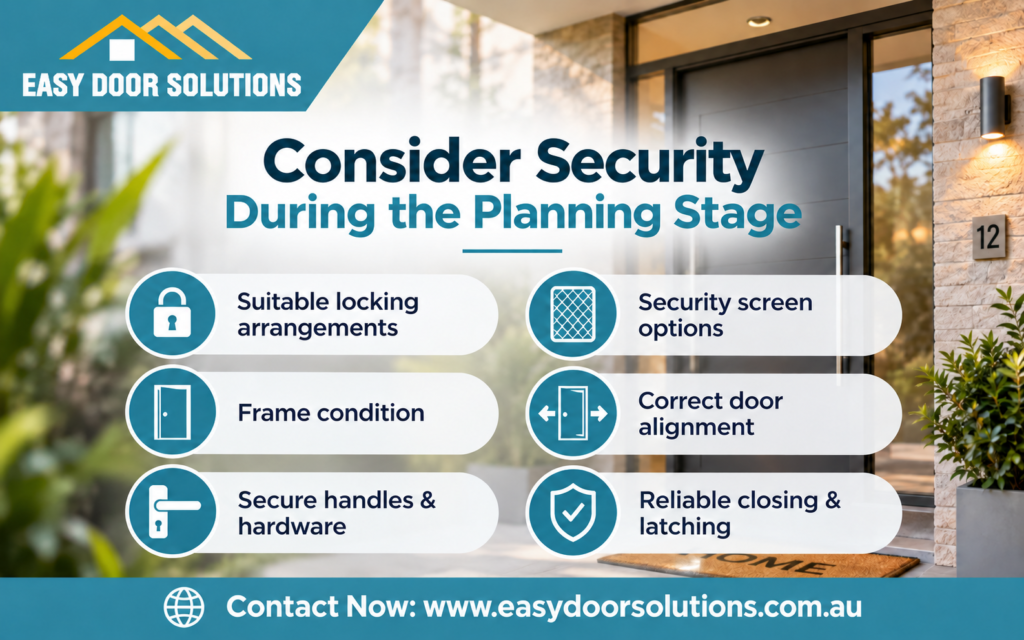
Homeowners may want to discuss:
- Suitable locking arrangements
- Frame condition
- Secure handles and hardware
- Security screen options
- Correct door alignment
- Reliable closing and latching
A well-planned installation should balance security with practical everyday use.
Think Beyond the Door if Other Openings Are Ageing
Sometimes replacing one door reveals that nearby windows or additional doors are experiencing similar problems.
This is particularly common during renovations or when several original openings are of a similar age.
Assessing them together can help homeowners decide whether to complete the work in stages or coordinate several upgrades. A planned approach can also make it easier to maintain consistent finishes, hardware and overall appearance.
However, replacement should not automatically be assumed. Windows and doors that remain structurally sound may only require repairs or replacement components.
What Happens During a Professional Door Installation?
The exact process varies according to the door and existing opening, but a typical project involves several key stages.
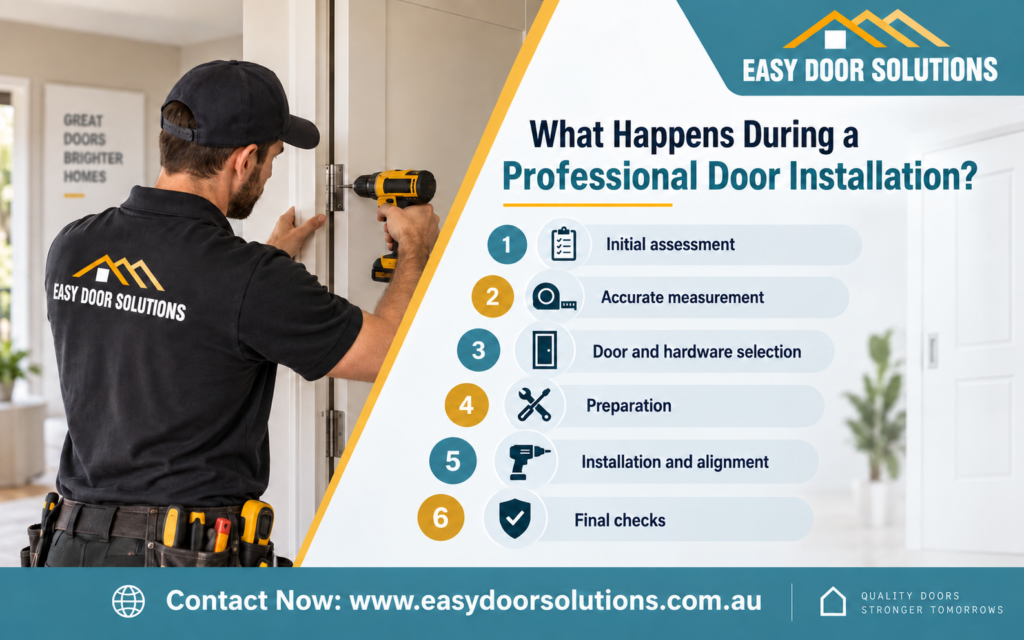
1. Initial Assessment
The existing door, frame and opening are inspected to identify problems and confirm what work may be required.
2. Accurate Measurement
Measurements are taken to determine the appropriate door size and configuration.
3. Door and Hardware Selection
The homeowner selects a suitable style together with handles, locks and other required components.
4. Preparation
Where necessary, the existing door is removed and the opening prepared for the new unit.
5. Installation and Alignment
The new door is positioned, fixed and carefully aligned so that it operates correctly.
6. Final Checks
Movement, closing, locking and hardware are checked before the installation is considered complete.
This process highlights why installation quality matters as much as the door itself.
Questions to Ask Before Going Ahead
Homeowners can make more informed decisions by asking a few practical questions before approving the work:
- Can the existing door be repaired instead?
- Is the current frame suitable for reuse?
- Which door type best suits this opening?
- What hardware will be installed?
- Does the opening require additional preparation?
- How will the new door lock and close?
- Are other nearby windows or doors showing similar issues?
- What maintenance will the new installation require?
Clear answers make it easier to understand what is being installed and why.
Why Choose Easy Door Solutions?
Easy Door Solutions provides door and window services for residential and commercial properties across Perth. Services include door and window repairs, new doors, new windows, security doors, flyscreens, sliding wardrobe doors, and roller and track work.
Having repair and replacement options available is particularly useful when homeowners are unsure whether they genuinely need a new door. Instead of making the decision based only on appearance or one worn component, the existing door, frame and hardware can be assessed together.
This can help determine whether adjusting or replacing components may restore normal operation, or whether a new door is more appropriate for the property’s longer-term requirements.
For homeowners researching door replacement perth, considering security, condition, operation and future use together can make it easier to choose between repair and complete replacement.
Frequently Asked Questions About Door Installation and Replacement
How do I know whether my door needs repair or replacement?
A door may only need repair when the main structure and frame remain sound and the problem relates to rollers, tracks, locks, handles or alignment. Replacement may be worth considering when there is extensive frame damage, recurring operational problems, poor security or a need for a different door configuration.
Can a sticking door be fixed without replacing it?
Yes, depending on the cause. A sticking door may result from alignment problems, worn rollers, damaged tracks, hinge issues or changes to the surrounding frame. Identifying the cause first can help determine whether a repair is sufficient.
What should be checked before installing a new door?
The opening should be measured accurately, and the condition of the frame, threshold, tracks and surrounding structure should be checked. The proposed hardware, locking system, door style and expected level of use should also be considered before installation.
Does a new door always require a new frame?
Not necessarily. An existing frame may sometimes be retained if it is structurally sound, correctly aligned and suitable for the proposed door. If it is damaged, distorted or incompatible with the new door, additional frame work may be required.
What type of door is suitable for a Perth home?
The right choice depends on the location and purpose of the opening. Sliding doors can suit patios and areas where floor space is limited, while hinged doors are commonly used for entrances and internal rooms. Security or screen doors may also be considered where additional security or ventilation is important.
Can doors and windows be upgraded at the same time?
Yes. If several openings are ageing or a wider renovation is underway, assessing doors and windows together may help homeowners achieve a more consistent appearance and plan the work efficiently. Each opening should still be assessed individually to determine whether repair or replacement is required.
Why does professional door installation matter?
Correct installation helps ensure that the door is properly aligned, opens and closes smoothly, locks correctly and works with the surrounding frame and hardware. Poor alignment can contribute to premature wear, difficult operation and unreliable locking.
How can I prepare for a door installation?
Clear the area around the doorway, discuss access requirements with the installer and confirm the selected door, hardware and locking options beforehand. It is also useful to raise any concerns about security, accessibility or nearby windows and doors before installation starts.
Plan the Upgrade Around Long-Term Use
A successful door upgrade is not simply about replacing an old panel with a new one. The frame, hardware, security, movement, access requirements and surrounding openings all contribute to the final result.
Taking time to assess the existing system first can help homeowners avoid unnecessary replacement while identifying situations where a new installation provides a more practical long-term solution. If your door has become difficult to use, no longer locks reliably or no longer suits your home, Easy Door Solutions can assess the existing setup and help you understand the available repair, replacement and installation options.